With great power comes great responsibility. Photoshop. It seems that its a rare occasion where photos aren't photoshopped.
In a recent ad, Target had made the mistake of photoshopping the genital area of a young female in a swimsuit ad.
Perhaps the outcry would not have been as bad if photoshop hadn't cropped the crotch area of their teenage model -- demonstrating an unrealistic body on impressionable young girls.
As a Public Relations student, this is a disaster. I believe that an effective way to combat this would be to launch a campaign that promoted positive body image and adds where the models body is not altered.
I have never been a fan of SeaWorld, I don't believe in keeping marine locked up in tanks for human entertainment. Very few (if any) humans would enjoy a life of being stared out, forced into entertainment, and confined to bedroom size room...so why do it to marine life or animals?
Generally, I focus on Public Relations disaster and blunders of corporations or high profile individuals, but I wanted to dedicate this post to the legislation that is put in motion against SeaWorld and the lies they have been feeding our country for decades.
Orcas, or Killer whales are known for the beauty, and hunting prowess in the wild. Orcas, a whale that is carnivorous is mostly black, with a few white spots. Its not only their beauty that draws humans to them but also their strong sense of self, family structures and matriarchal society.
Orcas live in pods, and have been recorded to have advanced intelligence, and enlarged sections of their brains which lends its self to extremely advanced emotional connections with other Orcas, this advanced social connection is so severe that the pods (a group of Orcas) actually hold their self identity with the group. When an Orca is separated from the group, it losses a sense of self, and causes extreme disstress. Their intelligence rivals that of humans, and according to Blackfish, a documentary that brought Orca abuse into the limelight.
This is where SeaWorld comes in. They have been kidnapping baby Orcas (or Calfs) from their pods, confining them in tanks, inbreeding them, as well as creating unnatural breeding practices. The Orcas that aren't featured in their shows often lack proper stimulation, driving them mad and causing psychotic breaks which lead to human deaths.
The emergence of this information about SeaWorld has lead to legislation in California that would end any and all purchase and breeding of Orcas in the State of California, directly impacting their San Diego location.
What is happening at SeaWorld is more than just a public relations blundered, it is a monstrosity. Their treatment of these endangered whales should bring an entire industry to its knees. Keeping these creatures in tanks is not only morally wrong, but also slowly killing an already endangered species. Their lifespans are cut in half when kept in captivity, and the dorsal fins in males is floppy -- a genetic mutation that has yet to be observed in the wild.
Sign the petition, help end the Orca abuse and thwart SeaWorlds attempt to stop legislation that could save the Orcas.
Whats all in a word? They are so much more than just parts of a sentence. Words carry meaning. They can bring you back to your childhood, hurt your feelings, make your day. Words. It's something that our society takes for granted, yet they are a fundamental part of our society.
Words are powerful, the pen is mightier the sword for a reason and it seems many terms and slogans in todays society seem to be outdated due to negative connotations.
Take the NFL Redskins. Redskins is more often than not considered a derogatory term for Native Americans. The term Redskins began when the Europeans came over, and often used red-skin to describe the paint that they wore on their faces, and over time has become a derogatory term.
The debate is on. Should an NFL team, or any franchise, company, non-profit etc. change their name because over time a term has become derogatory?
I believe they should. If we want to live in a society free of hate, we need to take a tougher stance on terms that promote it. Having Red-Skin slapped across t-shirts, flags, pants and other franchise materials will not aid in the removal of offensive terms from common vernacular.
As a PR specialist I would gear the rebranding campaign focusing on ending derogatory usage in the nation, beginning with changing the name of the NFL Redskins. This way it looks more similar to social improvement.
The competition for tag lines is steep. They need to be catchy, not cheesy. Not to short, but not to long. The days of jingles are seemingly over -- or at least in reserves for the next generation.
But what happens when your tag line seems to allude to a sub culture of society? In particular the drug culture.
You're On..Diet Coke tag line seems to allude to something a little bit larger than the idea of inspiring young entrepreneurs -- but actually the use of cocaine.
Billboards such as the one pictured above are popping up in cities that seem to illuminate the dreams of the youth -- New York and San Francisco.
As a Public Relations specialist it seems obvious that the new campaign tag line reads you're on Coke. This is particularly emphasized with the color contrast of the read Coke and the smaller diet behind it. Through simply restructuring the sentence, Diet Coke. You're on. it seems less inappropriate but still conveys the same message.
As a member of the targeted audience, and I resident of the San Francisco bay area the message seems confused. I'm on? On what?
After further research and watching the actual commercial the message is better conveyed. Diet Coke is the beverage thats by your side during the largest moments in your life -- whether its nailing the big test, landing investors, or making your dreams come true.
Within the video the phrasing is in reverse, You're on, which I believe elicits the message significantly better than the billboards and adds that are plastered around the city.
Tag lines are tricky. There is no doubt about it, but in an era when everything can be taken the wrong way, drug references should be avoided. It seems in the the creative stages of this project that this should have been assessed and the design of the billboards and advertising pieces should have been better constructed to avoid any confusion or misrepresentation of the brand.
Diet Coke Campaign plastered on wall in San Francisco
The pipe slowly cracked. Tick. Oil seeped into the surrounding ocean. Tock. Gaining momentum as the seconds flashed by. Tick. A small tear rapidly turned into a large hole. Tock. Fish, suffocating. Tick. Petroleum staining the water.
Tick. Tock. Tick. Tock.
In a matter of minutes British Petroleum was entering one of the largest Public Relations disaster of my lifetime.The country watched helplessly as marine life was suffocated and precious non renewable resources were being lost.
How does a company rebrand after devastating the Gulf of Mexico?
When studying crisis communications, one of the most important pieces is timeliness. Within hours of the leak, BP had addressed the public. The company also maintained conversation with the population in regards to the state of the spill and efforts to being put forth to plug the leak.
The leak got the best of BP, and after multiple attempts to plug it, gallons of oil lost, and ecosystems permanently damaged, it was finally stopped. Not only did BP become the hated face of big oil, but also proved to the nation that the corporation was unprepared for a spill.
As the entire industry of fishing and shrimping began a study collapse, and the impacts of the the spill began rippling far beyond what could have been imagined, Americans began looking for a scapegoat.
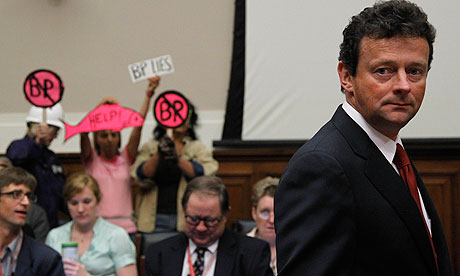
The guardian reported boycotts of BP popping up across the country. Then CEO Tony Hayward was brought into questioning as the BP oil spill evolved from being environmentally damaging into corporate responsibility.
Within three months of the oil spill Huffington Post had reported Hayward would be stepping down as CEO and taking a new post in Russia. CEO's within the company stepped down.
It's always interesting to me that as soon as a crisis occurs often times one of the first moves is for the CEO to take on a new, less visible within the company.
With lawsuits and settlements behind them, BP has refocused their marketing energy into pushing alternative energy solutions, and dropping their previous focus on environmental responsibility. According to Forbes, BP will spend around 500 million dollars in the process of rebranding to regain support within the United States. A component of their campaign involved new customer loyalty programs.
On the BP website, the theme is BP's commitment to various failings of the past. There is a tab that states "commitment to the Gulf of Mexico" incorporating the oil spill BP reminds its audience that they have not forgotten about the disaster and are committed to making it right. By pairing this with their attachment to alternative energies, it appears that BP is doing everything it can to exude corporate responsibility and leave the falling out of the oil spill behind them.
BP has also released various educational videos that provide their personal projections in oil. I think that this also helps BP because it gives the allusion of transparency, that their company has nothing to hid. This video and many others like it can be found on the BP youtube channel.
Despite the outrage in 2010 over the spill, the bottom line of BP has been minimally affected. Stocks have been fairly stable and even displayed an increase in shares when Hayward transferred posts within the company.
Maybe the crisis communications team is to congratulate for the lack of economic misfortune BP has experienced or perhaps the dependency of the world on oil and energy producing companies is the largest component of BP staying a float. The Deepwater horizon oil spill will stay on the books as one of the worst oil spills in the history of the United States.